The History of European Conservative Thought by Francesco Giubilei
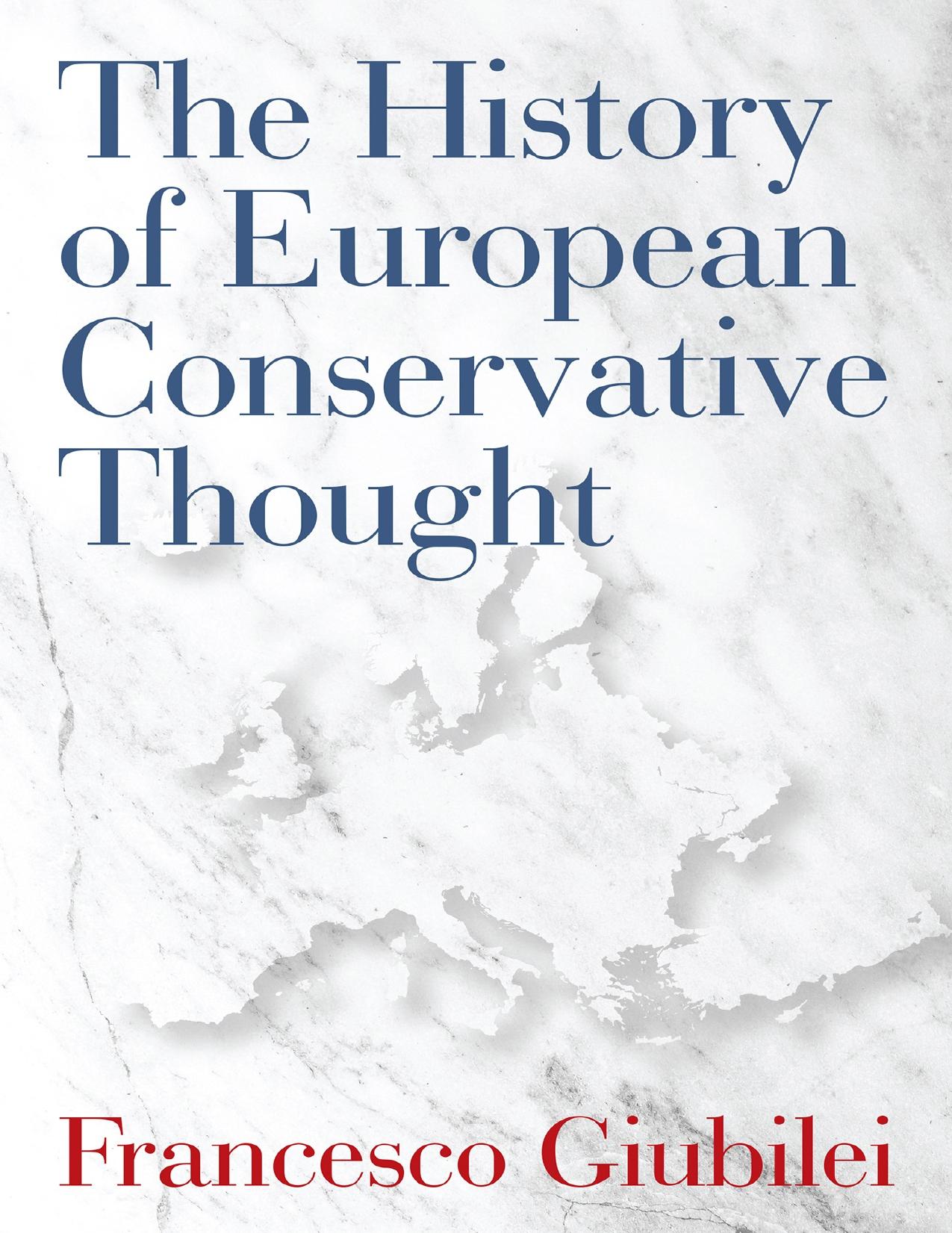
Author:Francesco Giubilei
Language: eng
Format: epub, pdf
Publisher: Gateway Editions
Leo Strauss (1899–1973)
Born in 1899 to a Jewish family, Strauss first attended the University of Marburg, then that of Hamburg and finally that of Freiburg. During this intensely academic period, he not only received a PhD in philosophy but also deepened his study of theology. Thanks to a research project about Hobbes, he met Carl Schmitt at the end of the 1920s, with whom he established a lifelong friendship. After being awarded a scholarship, he and his family moved to London in 1934 so he could deepen his study of Hobbes. He then moved to the United States in 1938, where he continued his philosophical studies at Columbia University. In 1948, he published On Tyranny and was named a member of the department of political science at the University of Chicago, where he worked as a philosophy professor until 1968.
During the war, he was called to serve as an interpreter during the occupation of Belgium. After the war, he continued his study and writing, publishing his Thoughts on Machiavelli in 1958 and What is Political Philosophy? in 1959. In the years following, he published a series of new publications, including a collection of essays and articles titled Liberalism: Ancient and Modern. His aversion to modernity was one of the central themes of his work:
Strauss was inspired by the conviction that modern political thought, from Hobbes onward, tends to be modeled on the paradigm of natural sciences, with liberalism (Locke), democracy (Rousseau), and eventually Nazism (Hitler) and Communism (Stalin) as inevitable outcomes. Strauss viewed the reasons for the tragedies of modernity to be nested in the fatal abandonment of the classical theory of natural rights, clearly formulated for the first time in Politics by Aristotle.72
According to Strauss, classical studies are the key to understanding the modern Western crisis. Through his reading of the classics, he developed a sharp criticism of nihilism and democracy as enacted in contemporary society. But Strauss was most critical of the nihilism of dictatorships. In his book On Tyranny, he looks for tyranny’s historical origin, asserting that the duty of political philosophy is to search for the right political order, through the possession of practical knowledge theorized by Plato and Aristotle, which guides individuals in their own ethical and political conduct. His reading of Xenophon’s work was central to his analysis of tyranny, the subheading of his book being An Interpretation of Xenophon’s Hiero. The book is actually a metaphor criticizing the political doctrine of the time, which Strauss accused of not understanding the dangers of Hitler’s and Stalin’s dictatorships in time. His thoughts are characterized by his critiques of modernity and skepticism toward progress. Although his vision of the state and society is more liberal than conservative, his criticism of progressivism and cultural relativism, his affirmation of natural inequality among men, and his defense of the family as a “good” value are stances that are undoubtedly ascribable to conservatism.
In Natural Right and History, Strauss writes:
The contemporary rejection of natural rights leads to nihilism—nay, it is identical with it.
Download
The History of European Conservative Thought by Francesco Giubilei.pdf
This site does not store any files on its server. We only index and link to content provided by other sites. Please contact the content providers to delete copyright contents if any and email us, we'll remove relevant links or contents immediately.
| Anarchism | Communism & Socialism |
| Conservatism & Liberalism | Democracy |
| Fascism | Libertarianism |
| Nationalism | Radicalism |
| Utopian |
The Secret History by Donna Tartt(18969)
The Social Justice Warrior Handbook by Lisa De Pasquale(12172)
Thirteen Reasons Why by Jay Asher(8856)
This Is How You Lose Her by Junot Diaz(6844)
Weapons of Math Destruction by Cathy O'Neil(6224)
Zero to One by Peter Thiel(5743)
Beartown by Fredrik Backman(5691)
The Myth of the Strong Leader by Archie Brown(5473)
The Fire Next Time by James Baldwin(5394)
How Democracies Die by Steven Levitsky & Daniel Ziblatt(5182)
Promise Me, Dad by Joe Biden(5120)
Stone's Rules by Roger Stone(5060)
A Higher Loyalty: Truth, Lies, and Leadership by James Comey(4920)
100 Deadly Skills by Clint Emerson(4888)
Rise and Kill First by Ronen Bergman(4747)
Secrecy World by Jake Bernstein(4710)
The David Icke Guide to the Global Conspiracy (and how to end it) by David Icke(4664)
The Farm by Tom Rob Smith(4475)
The Doomsday Machine by Daniel Ellsberg(4463)
